Last quarter, a Director of Marketing approved a 6-figure campus marketing program with an agency that looked perfect on paper. By month 6, they'd activated 12 campuses (not the promised 50), generated zero attribution data, and the CFO cut the program in a budget review.
This guide shows you what they missed.
Here’s exactly what to look for, and questions to ask that will help you select a real partner.
How Many Campuses Can They Activate Simultaneously?

How Many Campuses Can They Activate Simultaneously?


When you’re managing a Fortune 500 budget, a national activation is the baseline requirement.
Here’s what separates real Campus Marketing partners from the chaff: the ability to go from 5 campuses to 500 seamlessly.
What to look for:
- ›Campus Permissions
- ›Thoughtfully designed infrastructure
This is the level of detail you should expect to see from a potential partner’s infrastructure:
A. Formal Onboarding System
- ›Training materials and a certification process so ambassadors represent your brand consistently
- ›Scripts ambassadors can use after positive feedback, in casual conversations, and on social media.
- ›Clear expectations from day one: which activities are required, when, and how often
B. Defined Roles & KPIs
- ›Each ambassador has a role with measurable targets (referrals made, leads generated, events attended)
-
›
Use the AIM structure for incentives:
- Achievable target - what a solid performer hits
- Ideal target - stretch goal with escalated rewards
- Minimum target - the floor
- ›Review KPIs weekly. If ambassadors are not hitting the minimum target, they may be removed from the activation.
C. Communication Cadence
- ›Hold monthly (or bi-weekly for high-volume ambassadors) touch points to review what’s working, share feedback, and reinforce expectations. These can take as little as 15 minutes.
- ›Make touch points a priority. Good communication is a cornerstone to successful campaigns.
Campus Commandos runs its operations across dozens of universities concurrently because its leaders built the systems to support it.
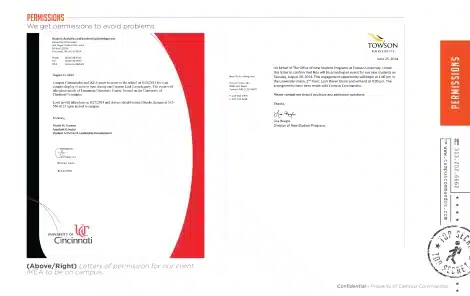
Can They Connect Campus Activity to Actual Sales Increases?

Can They Connect Campus Activity to Actual Sales Increases?

You’ve likely reviewed proposals promising more “brand awareness” and “higher engagement”, but does your potential marketing partner share how that translates to higher sales for your company? Do they promise you anything concrete, without all the jargon? While more sales should not be your only goal, your potential partner should be able to offer examples of real work they have done that led to real results for their clients.
The attribution framework you need:
- ›Clear methodology connecting student touchpoints to purchase behavior
- ›Regular Sales Lift Assessment reporting
Mens Wearhouse - The primary goal was to establish thought leadership at the moment students needed help most.
Men’s Wearhouse identified a critical timing window: one week before Career Fair season. Most students had little knowledge about professional dress standards, creating an educational gap during a high-stakes event.
Student ambassadors delivered “Dressing for Success” talks on campus during this window focused on making a strong first impression at Career Fairs. They also allowed Men’s Wearhouse to position itself as the expert at a time when students needed guidance.
The sales mechanism was embedded within the educational experience. During these talks, students received their first professional suit measurement. Those measurements were printed on personalized coupons students could keep.
The coupons created a subtle but powerful retention tool. Each contained students’ personal sizing information, making it less likely to be discarded. When students were ready to purchase a suit, they already had what they needed.
The lesson you can take away from this example is to lead with value at the moment your audience needs it most. When you solve a problem first, the sales opportunity follows.
Do They Have Year-Round Campus Relationships or Do They Start From Scratch Each Semester?

Do They Have Year-Round Campus Relationships or Do They Start From Scratch Each Semester?
A true partnership is cultivated over years. If your potential partner does not have a long-term plan for preserving and expanding their student ambassador network, that should raise a red flag for your evaluation team. Short-term relationships typically mean more spending to achieve what an experienced partner could provide for no extra cost.
A solid college marketing agency will publish its network of campuses directly on their website, making it easy to see the depth and breadth of their reach.

What Does Their Student Ambassador Network Actually Look Like?

What Does Their Student Ambassador Network Actually Look Like?

Not all Student Ambassador Networks are created equal.
There’s a difference between campus ambassadors with social capital and generic influencers.
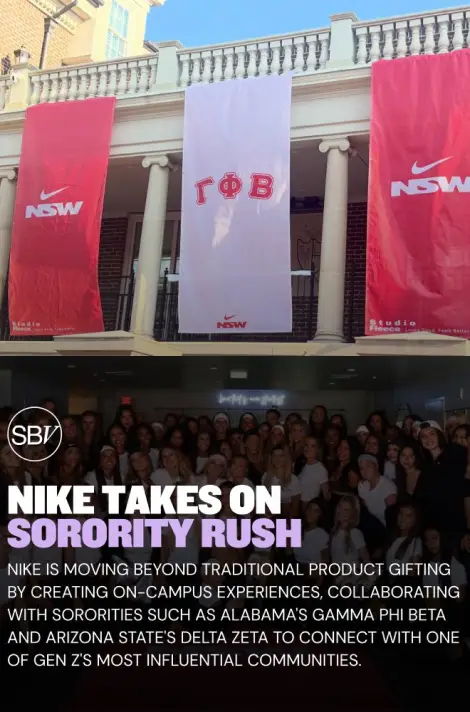
Campus Commandos recruits students who are already campus leaders: athletes, fraternity and sorority members, and student government representatives. These are the types of ambassadors that will provide results because they have influence and long-term campus presence.
Questions to ask:
- ›How are ambassadors recruited and vetted?
- ›What’s their average tenure in the program?
- ›Do they have social standing on campus?
The quality of your Student Ambassador Network determines whether or not your brand’s campaign succeeds.
Returning to the Men’s Wearhouse example, Student Ambassadors needed to be able to secure permissions to reach relevant student organizations a full week before the career fairs were held on campus. Although that may not seem like a challenging task, think about what all went into planning that interaction. They had to be good communicators; not afraid to talk in front of a room full of students; and most of all, they had to be strategic. Students who embody all of these traits are hard to find.
Can They Show You Fortune 500 Client Retention?

Can They Show You Fortune 500 Client Retention?
It takes a true ally to keep a brand’s business over the course of multiple years.
Campus Commandos maintained a 9-year partnership with Coca-Cola and multi-year relationships with Canon and HP. That’s proof we consistently deliver value to our clients.
When evaluating partners, dig past the logo slide:
- ›How long have clients stayed?
- ›Can they provide references from current long-term partners? Can you reach out to those references?
- ›Can they show you a testimonial? Look for video testimonials, as those allow you to hear directly from the client.
Client retention is a clear indicator of satisfaction.

Do They Have Proprietary Technology?

Do They Have Proprietary Technology?

Investment in marketing technology infrastructure can show you whether the company is committed to a positive customer experience.
Technology questions that matter:
- ›Is the platform proprietary?
- ›Can you access real-time data?
- ›Does it scale across multiple campaigns and campuses?
The Campus Commandos App provides real-time tracking, ambassador coordination, and performance analytics. It’s custom-built for Campus Marketing at scale and gives you the information you need, when you need it.
Can They Give You a Pilot Program With Real Results?

Can They Give You a Pilot Program With Real Results?
A properly structured pilot gives you:
- ›Attribution data from actual campus activations
- ›Proof of execution quality across multiple locations
- ›Data-backed numbers to present to stakeholders
Once you’ve seen a successful pilot, your potential partner should provide their next steps, including how this pilot could be scaled across multiple campuses. Their proposal should show how scaling saves your company money in the long run, while still providing actionable results.